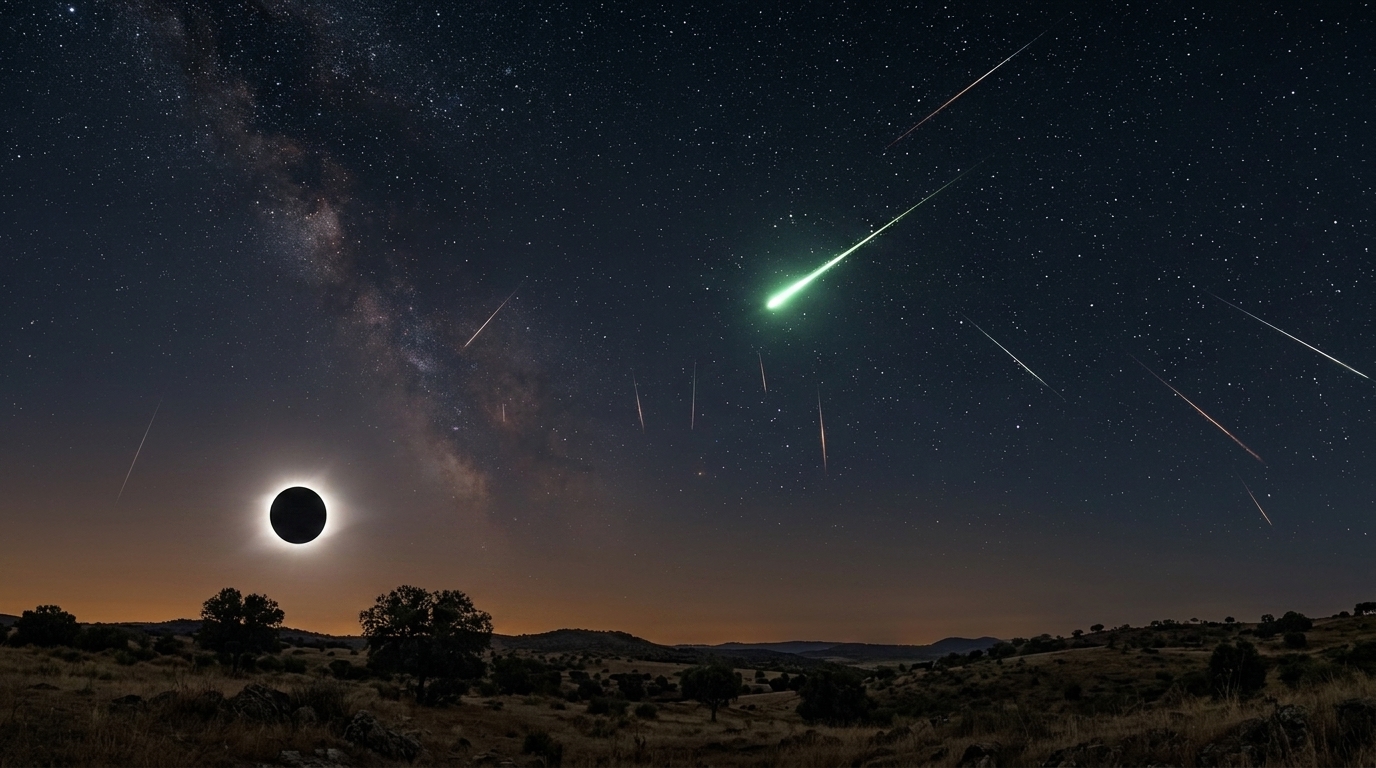
Escribiches «meteoritos», pero as Perseidas poñen meteoros no ceo, non rochas no chan. Cada escintileo é un pequeno fragmento de po ou rocha do cometa 109P/Swift–Tuttle que se desintegra na atmosfera terrestre. En 2026, o máximo principal chegará na noite do 12 ao 13 de agosto, pouco despois da eclipse solar total que atravesa parte de España.
1. Meteoro, meteoroide ou meteorito?
Un meteoroide é o pequeno corpo rochoso ou poeirento mentres aínda está no espazo. Cando entra na atmosfera terrestre e produce un rastro luminoso, é un meteoro. Só se chama meteorito o fragmento que sobrevive e chega ao chan. Observar as Perseidas significa buscar rastros de luz, non pedras que caen.
As Perseidas proceden do cometa 109P/Swift–Tuttle. O seu radiante, o punto desde o que parecen abrirse os rastros, está na constelación de Perseo. É unha referencia de dirección, pero os meteoros poden atravesar unha zona moito máis ampla do ceo.
2. Cando mirar en 2026
As Perseidas están activas do 17 de xullo ao 24 de agosto, coa maior actividade arredor do 13 de agosto. A previsión detallada da IMO sitúa o máximo principal entre as 02:00 e as 04:00 UTC e indica que o máximo amplo pode abarcar a noite próxima. Converte esa franxa á hora local antes de viaxar; en España e Bélxica cae antes do amencer do 13 de agosto.
O calendario celeste da NASA para 2026 sitúa a Lúa nova o 12 de agosto e a actividade das Perseidas o 13. A eclipse e os meteoros son eventos distintos: a totalidade só é visible dentro do camiño da eclipse, mentres que as Perseidas poden verse nunha rexión moito máis ampla con ceos despexados.
3. Un plan práctico despois da eclipse
Se xa estás nun lugar escuro para a eclipse, non recollas todo cando remate a fase parcial. Agarda a que o ceo quede totalmente escuro, mantén libre o horizonte occidental para volver con seguridade e acomódate cunha cadeira reclinable ou unha manta. As mellores taxas adoitan chegar máis tarde e cara ao amencer, cando o radiante está máis alto para os observadores do hemisferio norte.
- Escolle un lugar aberto, lonxe de lámpadas directas, e deixa que os teus ollos se adapten.
- Mira xeralmente cara ao nordeste, pero percorre todo o ceo en vez de fixarte só en Perseo.
- Leva roupa de abrigo, auga e unha luz vermella tenue; non precisas telescopio.
- Anota a hora, a dirección e o brillo dos bólidos, pero non esperes que cada rastro deixe un meteorito.
4. A expectativa correcta
A taxa horaria cenital de aproximadamente 100 é unha referencia idealizada para un ceo escuro, o radiante enriba da cabeza e ningunha perda de observación. Na práctica vense menos. Nubes, néboa, luces próximas, obstáculos, pausas e a altura cambiante do radiante reducen a cantidade.
A eclipse ofrece un espectáculo programado con precisión; as Perseidas recompensan a paciencia, un horizonte despexado e quedar fóra o tempo suficiente para que o ceo mostre a súa actividade.
«A eclipse é o momento programado. A chuvia de meteoros é a razón para seguir mirando».