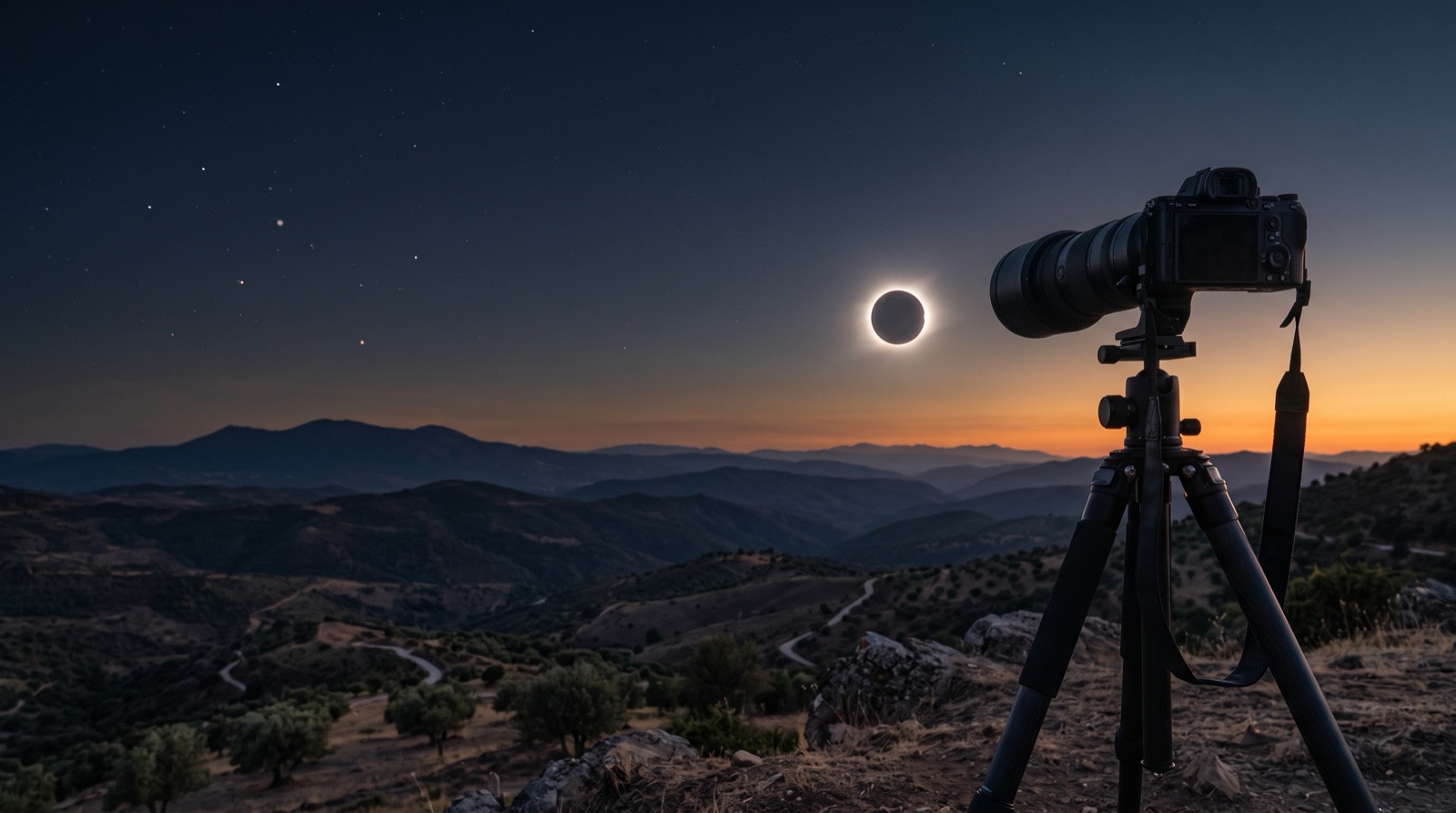
Op 12 augustus 2026 zal het vasteland van Spanje zijn eerste totale zonsverduistering in meer dan een eeuw meemaken. De gebeurtenis vindt laat op de dag plaats, met de zon laag boven de westelijke horizon; de exacte hoogte hangt af van de coördinaten van de waarnemer.
1. Essentiële apparatuurbescherming: zonnefilters vóór het objectief
Gebruik tijdens de gedeeltelijke fasen (C1–C2 en C3–C4) een zonnefilter dat voor uw camera of telefoon is ontworpen en bevestig dit vóór het objectief. ISO 12312-2 is de norm voor zonnebrillen en kijkers voor direct waarnemen; filters voor camera-optiek vormen een aparte productcategorie. Volg de instructies van de fabrikant en gebruik geen gewoon ND- of polarisatiefilter als zonnefilter.
- Specificaties zonnefilter: Gebruik Baader AstroSolar Safety Film (ND 5.0) of gecertificeerde glazen zonnefilters.
- Filter verwijderen: Het filter moet AAN blijven tot het tweede contact (C2), wanneer het laatste straaltje zonlicht in Baily's Beads verdwijnt. Verwijder gedurende de 1 tot 2 minuten van de totaliteit het filter om de delicate zonnecorona op te vangen. Bevestig hem onmiddellijk opnieuw op C3!
2. Camera-instellingen en belichtingsbracketing
De zonnecorona heeft een dynamisch bereik van meer dan 12 EV, veel groter dan welke belichting met een enkele sensor in een enkel frame kan vastleggen. De oplossing is belichtingsbracketing (AEB).
Aanbevolen handmatige camera-instellingen:
Basis-ISO: ISO 100 of 200 (voor minimale sensorruis)
Opening: f/8 tot f/11 (ideale diafragma-instelling voor optische scherpte)
Gedeeltelijke fasesluitertijd (met filter): 1/1000s tot 1/2000s
Totaliteit: corona-opnamen (zonder filter): 1/2000s (protuberansen), 1/500s (binnenste corona), 1/60s (middelste corona), 1/4s (buitenste coronale streamers)
3. DEM-horizonplanning voor zonsondergangtotaliteit
Omdat de totaliteit in een groot deel van Spanje kort voor zonsondergang plaatsvindt, is terreinobstructie uw voornaamste obstakel. Een bergrug 15 km naar het westen, 500 meter boven uw locatie, creëert een kunstmatige horizonhoek van 1,9° – die de zon vóór C2 kan afsnijden.
Gebruik de SunEclipses-simulator om vanaf uw geplande statiefpositie een globaal DEM-terreinprofiel te berekenen. De simulator controleert de zichtlijn naar de zon aan de hand van dat terreinprofiel en vermeldt de bron en de lokale pixelgrootte. Controleer twijfelachtige resultaten ter plaatse, omdat gebouwen, bomen, sneeuw, ongebruikelijke refractie en DEM-fouten niet worden gemodelleerd.
"Tijdens de totaliteit bij zonsondergang verandert de omringende hemel in een dramatische gouden schemering van 360 graden. Het fotograferen van de zonnecorona die direct boven een silhouet van Spaanse bergtoppen zweeft, zal unieke beelden opleveren."
4. Tips voor smartphonefotografie
Moderne smartphones kunnen tijdens de totaliteit verrassend mooie groothoekfoto's van de omgeving maken:
- Plak tijdens gedeeltelijke fasen een gecertificeerde zonnefilterfilm over de telefoonlens.
- Schakel automatische flits UIT en tik om de belichting op de heldere binnenste corona tijdens de totaliteit te vergrendelen.
- Gebruik een telefoonstatief om onscherpte te voorkomen als de lucht donkerder wordt tot diepe schemering.